
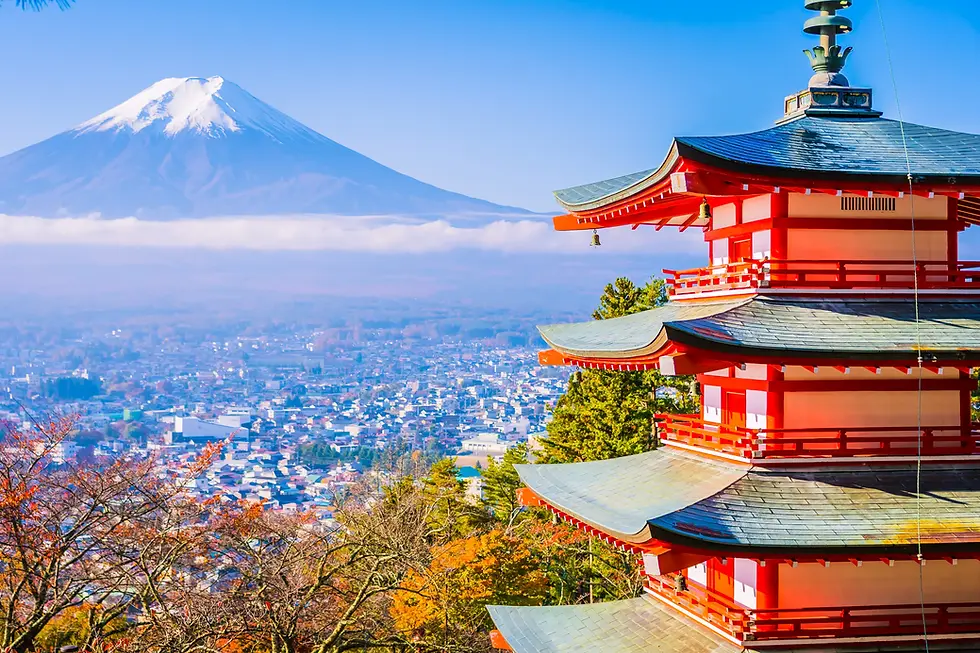
A country where ancient traditions live side by side with the future. Wander through quiet temples, dive into the rhythm of neon cities, and experience Japan’s unique balance of calm, energy, and beauty — a place that stays with you long after the trip ends.
Country Overview
Discover the soul of Japan, a destination where centuries-old traditions meet the rhythm of modern life. From the bright streets of Tokyo and the historic temples of Kyoto to scenic countryside and coastal views, Japan tours offer a seamless blend of...


Best Time to Visit
The best time to visit Japan is during spring (March to April) and fall (October to November), when the weather is mild and ideal for sightseeing, cultural tours, and city exploration. These seasons are considered the most popular for Japan travel, offering comfortable temperatures and stunning natural scenery.
Spring (March–April): Famous cherry blossom season, perfect for city tours, temple visits, and outdoor experiences.
Fall (October–November): Cooler air, vibrant autumn foliage, and excellent conditions for traveling across Japan.
For travelers looking for fewer crowds and better travel deals, the best time to visit Japan is during:
Late May to June: Pleasant weather, greener landscapes, and noticeably fewer tourists after peak cherry blossom season.
September: A quieter shoulder season with lower prices, fewer crowds, and good conditions for exploring Tokyo, Kyoto, and other major destinations.
Travel Tip: Cherry blossom season and national holidays attract large numbers of visitors. Planning a Japan vacation slightly outside peak travel months allows for a more relaxed experience and better hotel availability.
Country Highlights
Osaka
Street food, vibrant nightlife, and a lively local vibe. Dive into Japan’s culinary capital, explore modern attractions, and enjoy easy access to nearby cultural landmarks and scenic destinations.
Kyoto
Ancient temples, bamboo forests, and timeless beauty. Walk through historic districts, discover sacred shrines, and experience traditional Japan through tea ceremonies, gardens, and preserved cultural heritage.
Tokyo
Neon-lit streets, cutting-edge culture, and endless energy. Explore iconic neighborhoods, historic temples, and world-class dining while experiencing the fast-paced rhythm and modern spirit of Japan’s capital.
Practical Tips
VISA
U.S. citizens can enter Japan visa-free for up to 90 days for tourism. Your passport must be valid for the duration of your stay. No visa is required for short-term visits.
CURRENCY
Japanese Yen (JPY). Credit cards are widely accepted in cities, hotels, and major stores, but cash is still commonly used in small shops, temples, and local restaurants. ATMs are easy to find, especially at convenience stores.
TRANSPORT
Japan offers one of the world’s best transportation systems. High-speed trains (Shinkansen), local trains, and subways connect cities efficiently. Taxis are safe and reliable, though more expensive. Public transport is clean, punctual, and easy to navigate.
HEALTH & SAFETY
Japan is one of the safest countries in the world. Tap water is safe to drink, and healthcare is modern and reliable. Respect local customs, follow etiquette in public spaces, and dress modestly when visiting temples and shrines.
Frequently Asked Questions
Can I enter a temple or shrine casually dressed?
Yes, but modest clothing is recommended. Avoid overly revealing outfits and follow posted rules when visiting sacred sites.
Is English widely spoken in Japan?
Basic English is spoken in major cities and tourist areas, but not everywhere. Simple phrases, translation apps, and polite gestures go a long way.
Should I remove my shoes indoors?
Yes. Shoes must be removed when entering homes, some traditional accommodations, temples, and certain restaurants. Indoor slippers are usually provided.
Is it acceptable to throw trash in public places?
No. Japan is very clean, and littering is frowned upon. Public trash bins are limited, so people often carry their trash with them until they find a proper bin.
Can I talk loudly on public transportation?
No. Public transport is typically quiet. Phone calls, loud conversations, and speakerphone use are considered rude.
Is it okay to eat or drink while walking?
Generally no. Eating and drinking while walking is discouraged, especially in cities. Locals usually stop to eat or drink near vending machines or designated areas.
Do people tip in Japan?
No. Tipping is not customary in Japan and can be considered awkward or even confusing. Excellent service is already included and expected.


